
How to Reduce a High Fever at Home in Mauritius — and When to Call a Doctor
A high fever is one of the most common reasons families in Mauritius call for a doctor, and one of the most stressful, especially when it appears at night or in a young child. The good news is that most fevers are the body’s normal response to infection and settle on their own with simple care.
The aim at home is not to force the temperature down to normal at all costs, but to keep the person comfortable, prevent dehydration, and watch carefully for the signs that point to something more serious. This guide explains what counts as a high fever, what genuinely helps, what to avoid, and exactly when to seek medical help in Mauritius.
What Counts as a High Fever?
A fever is generally defined as a body temperature of 38°C (100.4°F) or higher. It is considered a high fever above roughly 39.5°C (103°F). However, the number on the thermometer matters far less than how the person looks and behaves.
Adults versus children
A child who is alert, drinking, and playing with a temperature of 39°C is usually less worrying than a child who is limp, pale, and refusing fluids at 38.5°C. In adults, the same principle applies: behaviour, breathing, hydration, and any accompanying symptoms tell you more than the temperature alone.
Why the body produces a fever
Fever is a defence mechanism. Raising the body’s temperature makes it harder for many viruses and bacteria to multiply and helps the immune system work more efficiently. This is why a moderate fever in an otherwise stable person is not, in itself, dangerous.
How to Bring Down a Fever Safely
A few simple measures help most people feel better while their body fights the underlying infection.
Keep fluids up
Fever increases fluid loss through sweating and faster breathing, so dehydration is the main practical risk. Offer water, diluted juice, clear soups, or an oral rehydration solution regularly in small amounts. For infants, continue breastfeeding or formula as normal.
Keep the environment cool
Remove extra layers of clothing and keep the room comfortably cool. Wrapping a feverish person in blankets traps heat and can push the temperature higher. A light sheet is enough.
Use fever-reducing medicine appropriately
Paracetamol (acetaminophen) is the most commonly used medicine to relieve the discomfort of fever. Always follow the dose printed on the package or advised by a doctor, and never exceed the recommended amount. This is especially important for children, where the correct dose depends on weight rather than age. If the fever is accompanied by severe joint pain or a rash, see the section below before using ibuprofen or aspirin.
Use lukewarm, not cold
A lukewarm sponge or damp cloth on the forehead can be soothing. Avoid cold baths or ice, which cause shivering. Shivering generates heat and can actually raise the core temperature.
What to Avoid
- Do not give aspirin to children or teenagers, as it is linked to a rare but serious condition called Reye’s syndrome.
- Do not combine several medicines that each contain paracetamol, as this can lead to accidental overdose.
- Do not try to “sweat out” a fever under heavy blankets.
- Do not use cold baths or alcohol rubs to cool the skin.
- Do not ignore a fever that keeps climbing despite these measures, or one with the warning signs below.
Fever With Other Symptoms — What It Could Mean
A fever rarely travels alone. The symptoms that come with it often point to the cause and help decide how urgently a doctor is needed.
Fever with severe joint pain
Sudden high fever followed by intense joint pain, particularly in the hands, wrists, ankles, and feet, can be a sign of chikungunya, which is currently circulating in Mauritius. Until a mosquito-borne illness has been ruled out by a doctor, it is safer to use paracetamol rather than aspirin or ibuprofen. Read our chikungunya outbreak update for the latest situation in Mauritius.
Fever with body aches and pain behind the eyes
Generalised body aches, pain behind the eyes, and a fever can suggest dengue fever, which is also spread by mosquitoes in Mauritius. Dengue requires medical assessment, and certain painkillers should be avoided until it is excluded.
Fever with vomiting or diarrhoea
When fever comes with vomiting or diarrhoea, the priority is preventing dehydration. Learn the warning signs of dehydration and when IV fluids help.
When to Call a Doctor
Most fevers can be safely managed at home, but some need prompt medical assessment.
Call 86121 if:
- A baby under 3 months has any fever
- The fever is above 39.5°C and does not improve with home measures
- The fever lasts more than 3 days
- There is difficulty breathing, a stiff neck, a severe headache, or confusion
- A rash appears that does not fade when pressed with a glass
- There is repeated vomiting or the person cannot keep fluids down
- Signs of dehydration appear (very little urine, dry mouth, no tears, drowsiness)
- The person is elderly, pregnant, or has a weakened immune system or serious chronic condition
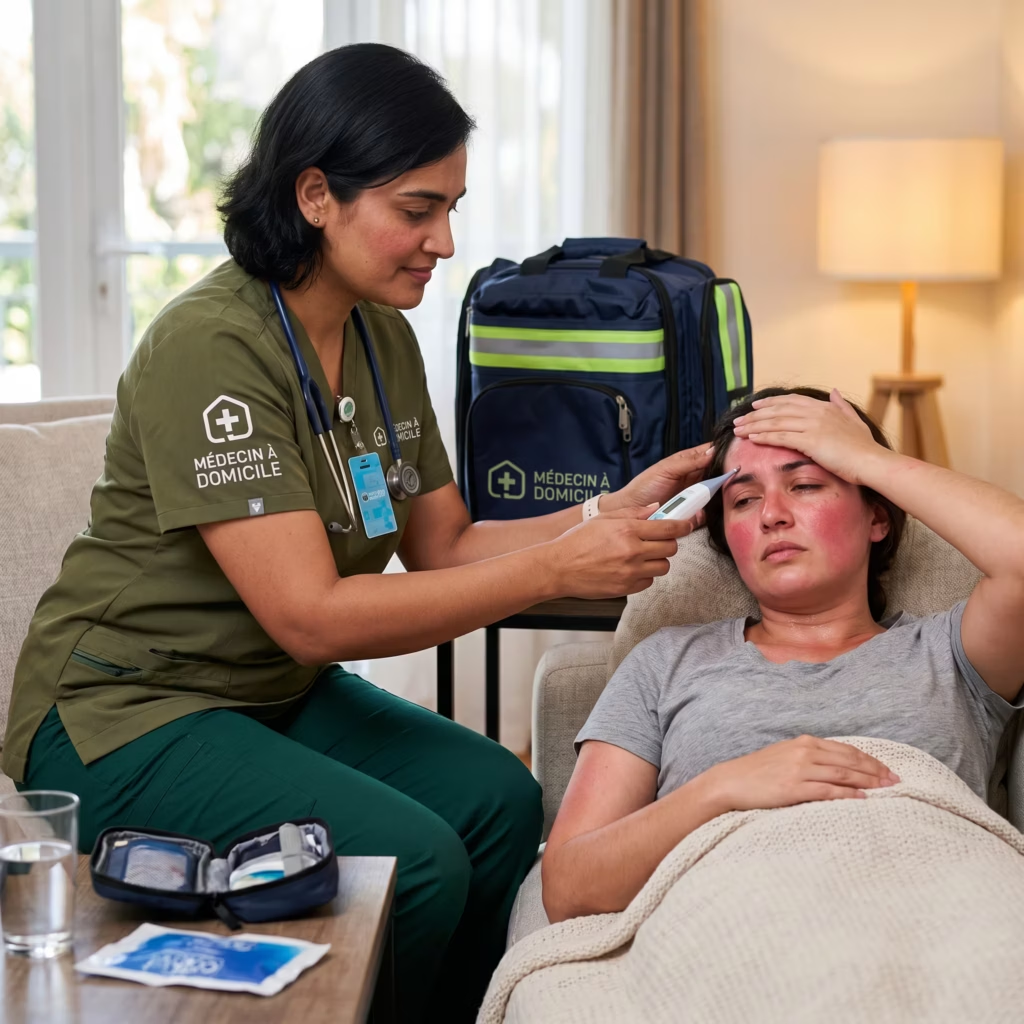
A home doctor from Medecin a Domicile can examine the patient, measure vital signs, identify the likely cause, administer IV fluids if dehydration is present, and arrange blood tests where needed, without the stress of a waiting room.
Information for Tourists
Falling ill with a fever during a holiday is unsettling, particularly when you do not know the local healthcare system. If you develop a fever while visiting Mauritius, you do not need to search for a clinic or leave your hotel.
A qualified doctor can come to your hotel room at any hour to assess the fever, rule out mosquito-borne illnesses such as chikungunya and dengue, and provide treatment. A doctor can visit tourists 24/7 anywhere in Mauritius. Call 86121 or WhatsApp +230 58 01 7777. Official medical invoices accepted by international travel insurers are provided.
Managing a Fever at Home
For a straightforward fever in an otherwise healthy person, supportive care is usually all that is needed. Rest and avoid strenuous activity. Drink fluids steadily throughout the day. Dress lightly and keep the room cool. Use paracetamol for comfort, following the recommended dose. Monitor the temperature and general condition, paying particular attention to the warning signs above, especially in the first few days. Most simple fevers begin to improve within 48 to 72 hours.
Frequently Asked Questions
Is a high fever dangerous on its own?
For most healthy people, fever itself is rarely harmful and is part of how the body fights infection. What matters is the underlying cause and how the person is coping. Very high fevers, any fever in a baby, or a fever with warning signs do need medical assessment.
What is the fastest way to bring down a fever at home?
Keep the person hydrated, dress them lightly, keep the room cool, and use paracetamol at the recommended dose for comfort. Avoid cold baths, which cause shivering and can raise the temperature. Call 86121 if the fever is very high or does not respond.
Should I alternate paracetamol and ibuprofen?
Some doctors advise this in specific situations, but it is easy to make dosing errors, and ibuprofen should be avoided if dengue has not been ruled out. Do not alternate medicines without advice from a doctor or pharmacist.
When should I worry about a fever in my child?
Seek medical advice for any fever in a baby under 3 months, a fever above 39.5°C that does not improve, a fever lasting more than 3 days, or any fever with drowsiness, breathing difficulty, a non-fading rash, repeated vomiting, or signs of dehydration.
Can a doctor treat a fever at home in Mauritius?
Yes. A home doctor can examine the patient, check vital signs, identify the likely cause, provide treatment, administer IV fluids if needed, and arrange tests. Call 86121 for a 24/7 home visit anywhere on the island.
A fever is usually the body doing its job, but knowing what helps and what to watch for keeps it that way. If a fever is high, persistent, or comes with any warning sign, call 86121 for a doctor at your door, 24/7, anywhere in Mauritius.
This article is general health information and not a substitute for professional medical advice. See our Medical Disclaimer.