
Seeing a General Practitioner in Mauritius
A fever that will not settle, a child with earache, a blood pressure check, a sick note for work: for most health problems, the right first step is a general practitioner, or GP. If you have ever typed “general practitioner Mauritius” or “doctor near me” into your phone late on a Sunday, you know the question is not only who to see, but where and when. This guide explains what a GP does, your options in Mauritius and how to choose, day or night.
What Does a General Practitioner Do?
A GP, also called a family doctor or generalist doctor, is trained to look after the whole person rather than one organ or one disease. For most people, the GP is the first point of contact with the health system.
- Diagnosis and treatment of common illnesses: fever, flu, sore throat, chest infections, gastro, skin problems, back pain, urinary infections.
- Chronic disease follow-up for conditions such as diabetes and high blood pressure, including checking that treatment is working.
- Prescriptions and prescription renewals.
- Medical certificates and sick notes, after an examination.
- Vaccinations for children and adults.
- Referral to specialists, laboratories and imaging such as X-rays and scans, when needed.
Your Options in Mauritius
There are four main ways to see a GP in Mauritius, and many families use more than one.
1. Public health centres and hospitals
The Ministry of Health and Wellness runs Area Health Centres and Community Health Centres across the island, alongside the outpatient departments (OPD) of public hospitals. Public health care is free at the point of use, and these centres handle everyday problems as well as chronic disease follow-up. The trade-off is time: waiting times can be long and opening hours vary, so check locally before you go.
2. Private GP practices and private clinics
Private GPs see patients in their own practices, and private clinics also offer general consultations. You choose your doctor, and many families keep the same one for years, which helps continuity. Fees and opening hours vary from one practice to another, so ask in advance, and check what your health insurance covers.
3. A GP who comes to your home
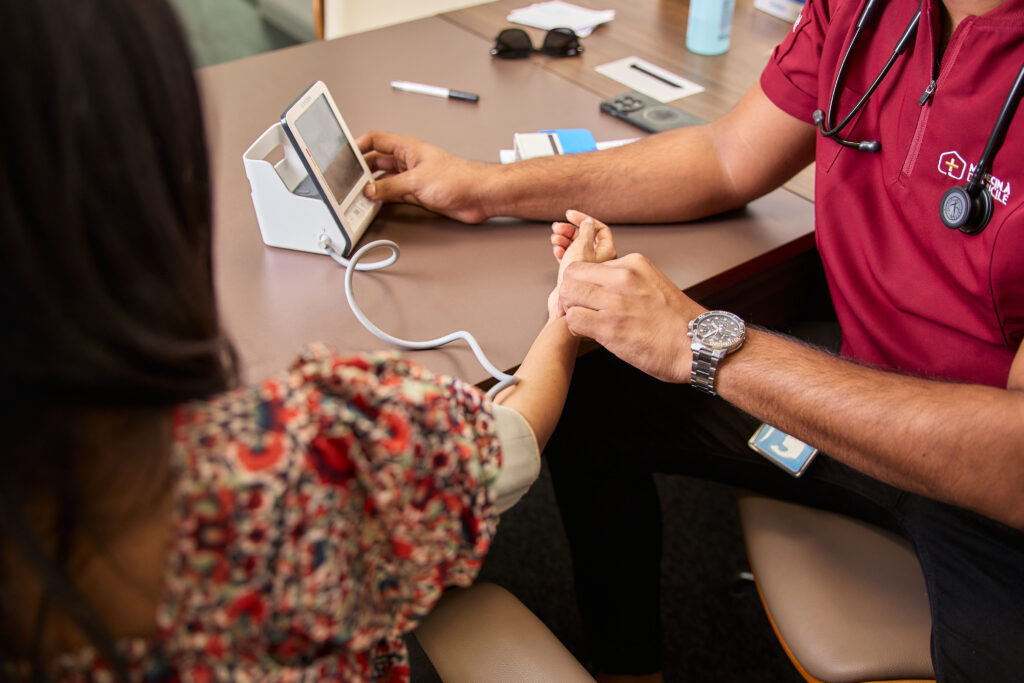
Here, the doctor comes to you. This is what Médecin à Domicile does: a doctor at home 24/7, including nights, weekends and public holidays. No waiting room and no travel make a real difference when the patient is elderly, a young child or too unwell to sit in a queue. A visit costs Rs 3 000 by day and Rs 4 000 at night, cashless for eligible Eagle Insurance and Jubilee Insurance members. It costs more than a free public consultation, but you are seen at home, when you need it.
4. Telemedicine
For advice, follow-up and simple problems, a video or phone consultation saves the trip. Telemedicine works well for discussing results, reviewing a chronic condition or deciding whether you need to be examined. It cannot replace a physical examination, so the doctor will tell you if you need to be seen in person.
How to Choose the Right Option
There is no single best answer, but a few questions usually point the way.
- How urgent is it? A routine blood pressure review can wait for an appointment. A high fever in a toddler at 11 pm is often better not left until morning. A life-threatening symptom needs 114, not a GP (see below).
- Can the patient travel? An elderly parent with limited mobility, a feverish child, severe back pain or no transport all make a home visit the practical choice.
- What time is it? Practice hours vary, and many are closed late in the evening and on Sundays. At night, the choice often comes down to the hospital or a home visit.
- Cost and insurance: public care is free, private fees vary, and home visits have fixed day and night prices, cashless for some insurance members.
- Will tests be needed? Some do not require a trip: blood tests at home and an ECG at home are both possible. X-rays and scans still mean going to a centre.
When It Is Not a GP but an Emergency
A GP is not the right first call in a life-threatening situation. Call SAMU on 114 straight away for:
- chest pain, especially if it spreads to the arm, jaw or back, or comes with sweating or breathlessness;
- signs of a stroke: a drooping face, weakness in an arm or leg, slurred or confused speech;
- severe difficulty breathing;
- unconsciousness, or a person you cannot wake;
- major trauma, such as a serious road accident, a bad fall or heavy bleeding.
Every minute counts, so do not wait for a doctor to come to you. Our guide to a medical emergency at home explains what to do while help is on the way.
How to Get the Most Out of a GP Visit
Whether you see a GP at a health centre, in a practice or at home, a little preparation helps the doctor help you.
- Bring your medicines list, or the boxes themselves, including supplements and anything bought without a prescription.
- Keep previous results to hand: blood tests, ECGs, scan reports and hospital letters.
- Note your symptoms and when they started, what makes them better or worse, and any temperature readings.
- Mention allergies to medicines or anything else, and say if you are pregnant or breastfeeding.
- Ask what to watch for: which signs mean you should call back or go to hospital, and when you should start to feel better.
For a child or an elderly parent, the person who knows them best should be there too.
“Doctor Near Me” at Night or on a Sunday
Searching for a “GP near me” usually happens at the worst moment: late on a Saturday, on a public holiday or in the middle of the night, when the local practice is closed. A home visit removes the “near me” problem: the doctor comes to you anywhere on the island, at home or in a holiday rental. Médecin à Domicile runs a GPS-tracked fleet and sends the nearest available doctor. See the areas we cover on our doctor home visit page.
When to Call a Home Doctor
Médecin à Domicile has been sending GPs to homes across Mauritius since 2016. Our 20+ in-house doctors are registered with the Medical Council of Mauritius and speak English, French and Creole. A home visit costs Rs 3 000 during the day (08:00–18:00) and Rs 4 000 at night (18:00–08:00). Eligible Eagle Insurance and Jubilee Insurance members pay nothing on the spot, and other insurers reimburse on claim. Full details are in our price guide, or call 86121.
Frequently Asked Questions
How do I find a general practitioner near me in Mauritius at night?
At night, most private practices are closed, so your main options are a hospital emergency department or a home visit. Médecin à Domicile works 24/7 across the island and sends the nearest available GP to your home, hotel or holiday rental: call 86121. For chest pain, signs of a stroke, severe breathing difficulty or unconsciousness, call SAMU on 114 instead.
How much does a GP home visit cost in Mauritius?
With Médecin à Domicile, a home visit costs Rs 3 000 during the day (08:00–18:00) and Rs 4 000 at night (18:00–08:00). Eligible Eagle Insurance and Jubilee Insurance members pay nothing on the spot. With other insurers, you pay for the visit and then claim it back. Call 86121 for any question about prices.
Can a GP come to my home?
Yes. A home-visit GP examines and treats you in your own home, which helps when the patient is elderly, bedridden, a young child or too unwell to travel. In Mauritius, Médecin à Domicile sends a GP 24/7, including nights, weekends and public holidays. The doctor can prescribe, renew prescriptions, issue a medical certificate and arrange blood tests or an ECG at home if needed.
Can a GP give me a medical certificate?
Yes. A GP can issue a medical certificate or sick note after examining you, if your condition justifies it. Because the certificate is based on that examination, you need to be seen while you are unwell, not afterwards. A home-visit doctor can write it during the visit, so you do not have to leave your bed to get one.
Is public health care free in Mauritius?
Yes. Public health services in Mauritius are free at the point of use. The main trade-offs are waiting times and opening hours, which vary from one health centre to another, so check locally before you go. Many families combine public care with a private GP or a home visit, depending on the time of day and the patient’s mobility.
Need a GP today, tonight or this Sunday? Join the 80,000+ families who already trust us: call 86121.