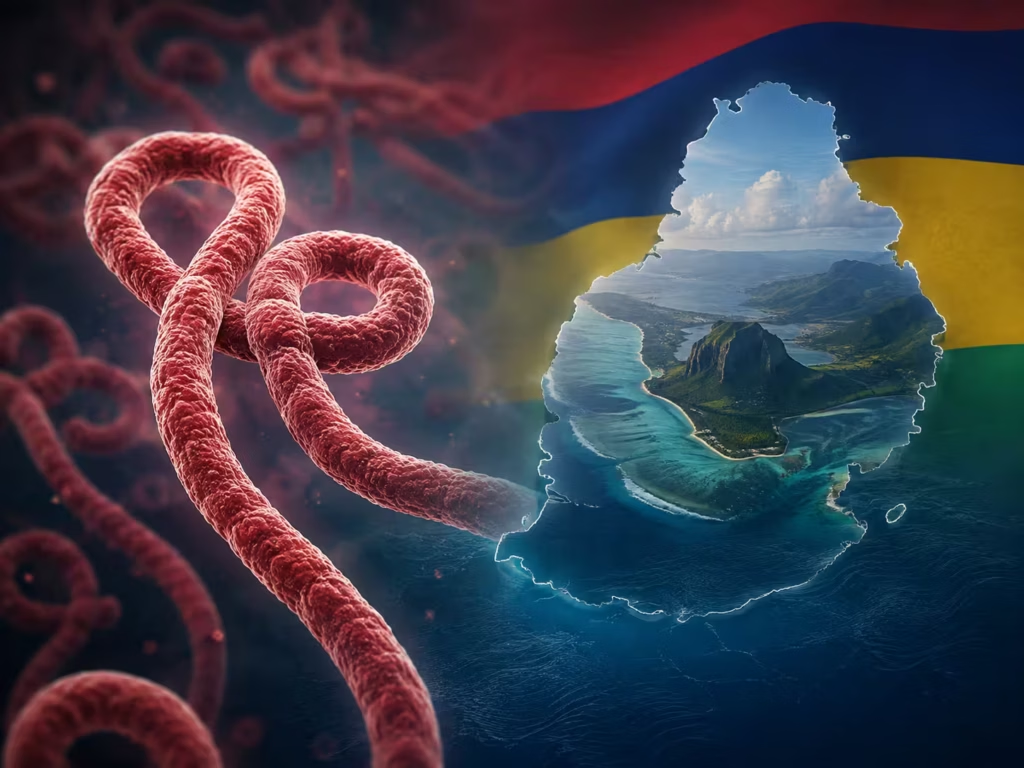

Ebola and Mauritius: What the New Border Measures Mean for You
In August 2026, Mauritian authorities announced border health measures in response to the Ebola outbreak affecting parts of Central and East Africa. The measures include health screening checks on arrival and entry restrictions for travellers who have recently visited the Democratic Republic of Congo, Uganda, or South Sudan.
Understandably, news like this raises questions. Is Ebola in Mauritius? Is it safe to travel? Should residents be worried? This article explains what the measures actually mean, what the real risk level is, and what travellers and families in Mauritius need to know, calmly and factually.
Important: there are no confirmed Ebola cases in Mauritius. The border measures are precautionary. Information in this article reflects the situation as of August 2026 and official requirements can change at short notice; always check with your airline and official government sources before travelling.
What Exactly Has Changed at the Border
In August 2026, Mauritian authorities announced two main measures, as reflected in official travel advisories updated at the time. First, health screening checks on arrival, which typically involve temperature checks and health declarations for incoming travellers. Second, entry restrictions for travellers who have recently visited the Democratic Republic of Congo, Uganda, or South Sudan, the countries affected by the outbreak at the time.
Check the Ministry of Health and Wellness for the latest measures before travelling. Travellers are also advised to check the latest requirements with their airline or travel provider before departure, and to cooperate fully with health authorities on arrival. These measures can change at short notice depending on how the outbreak evolves.
If you are planning a trip to or from Mauritius and have not visited the affected countries, these measures should have minimal impact on your journey beyond a possible brief screening on arrival.
What Is Ebola?
Ebola virus disease is a severe illness caused by the Ebola virus, first identified in 1976. Outbreaks occur periodically in parts of Central and East Africa. The disease begins with fever, fatigue, muscle pain, headache, and sore throat, and can progress to vomiting, diarrhoea, and in severe cases internal and external bleeding. Symptoms can appear anywhere from 2 to 21 days after exposure.
Ebola is serious, but it is also far less contagious than respiratory viruses like influenza or COVID-19, and this distinction matters enormously for understanding the actual risk.
How Ebola Spreads (And How It Does Not)
This is the most important section of this article, because fear of Ebola often comes from misunderstanding how it transmits.
Ebola spreads through direct contact with the blood or body fluids of a person who is sick with or has died from Ebola, or with objects contaminated by those fluids. It can also spread through contact with infected animals in outbreak regions.
Ebola is not airborne. It does not spread through the air like flu or COVID-19. You cannot catch it by being in the same room as someone, walking past someone, or through casual contact. Critically, people infected with Ebola are generally not contagious until they develop symptoms, which is precisely why arrival screening for symptoms is an effective precaution.
This is why the risk to the general public in Mauritius, thousands of kilometres from the outbreak zone and with border screening introduced in August 2026, is considered very low.
What This Means for Residents of Mauritius
For families living in Mauritius, the practical answer is: very little changes. As of August 2026, there were no confirmed cases on the island, the outbreak is geographically distant, transmission requires direct contact with a symptomatic person’s body fluids, and border screening was introduced in August 2026.
There is no need to change your daily routine, avoid public places, or take special precautions. The sensible things remain the sensible things: normal hand hygiene, staying informed through official sources such as the Ministry of Health and Wellness, and being wary of alarmist rumours on social media, which tend to spread faster than any virus.
What This Means for Travellers and Tourists
If you are visiting Mauritius or planning a trip, the key points are straightforward. Mauritius remained open to visitors, with official advisories in August 2026 advising normal safety precautions. Expect the possibility of health screening on arrival, which is quick and routine. If you have recently visited the Democratic Republic of Congo, Uganda, or South Sudan, check the entry restrictions with your airline before travelling, as they may affect you. Requirements can change at short notice, so verify the latest rules close to your departure date.
For everything else about staying healthy during your visit, from mosquito protection to what to do if you fall ill at your hotel, a doctor can come to you 24/7 anywhere on the island.
Fever After Travel: When It Matters and What to Do
Here is the practical guidance that matters most.
If you have fever and have recently travelled from an Ebola-affected country (or had close contact with someone who has), do not simply go to a clinic or hospital waiting room. Contact the health authorities immediately, inform them of your travel history, and follow their instructions. This protects you and everyone around you, and ensures you are assessed under the correct protocol. In an emergency, SAMU can be reached on 114.
If you have fever and no connection to the affected regions, there is no reason to think of Ebola. Fever in Mauritius is overwhelmingly caused by common conditions: viral infections, seasonal flu, dengue, chikungunya, gastro, and urinary or respiratory infections. For these everyday situations, a doctor can assess and treat you at home: call 86121, available 24/7 anywhere in Mauritius. Read our guide on managing high fever at home.
Perspective: Why Precaution Is Not Panic
It is worth ending on perspective. Border screening is what responsible public health looks like: acting early, at the point of entry, before any case arrives, precisely so that residents and visitors do not need to worry. Mauritius took similar precautionary approaches during past global health events, and the combination of geographic distance, the nature of Ebola transmission, and active screening keeps the risk to the island very low.
The best thing families in Mauritius can do is stay informed through official channels, ignore sensationalism, and carry on as normal. And for the everyday health concerns that actually affect families here, fevers, infections, chronic conditions, children and elderly parents falling ill, professional medical care remains one phone call away, day and night.
Frequently Asked Questions
Is there Ebola in Mauritius?
No. As of August 2026, there were no confirmed Ebola cases in Mauritius. The border measures announced by Mauritian authorities in August 2026 are precautionary, in response to the outbreak affecting the Democratic Republic of Congo, Uganda, and South Sudan.
Is it safe to travel to Mauritius right now?
Yes. As of August 2026, official travel advisories advised normal safety precautions for Mauritius. Expect possible health screening on arrival. If you have recently visited an affected country, check entry restrictions with your airline before departure. Check the Ministry of Health and Wellness for the latest measures before travelling.
Can Ebola spread through the air?
No. Ebola is not airborne. It spreads only through direct contact with the blood or body fluids of someone who is sick with or has died from Ebola. Casual contact does not transmit the virus, and people are generally not contagious before symptoms appear.
What are the Ebola symptoms to know?
Early symptoms include fever, fatigue, muscle pain, headache, and sore throat, appearing 2 to 21 days after exposure. These symptoms are shared with many common illnesses; they are only a concern in combination with recent travel to an affected region or contact with a confirmed case.
What should I do if I have a fever after travelling from an affected country?
Do not go to a waiting room. Contact the health authorities immediately, tell them your travel history, and follow their instructions. In an emergency, call SAMU on 114.
Who do I call for a normal fever or illness in Mauritius?
For everyday illness with no link to the affected regions, a licensed doctor can assess and treat you at home. Call 86121, available 24/7 anywhere in Mauritius.
Stay informed, not alarmed. For everyday medical care at home anywhere in Mauritius, day or night, call 86121 or visit medecin.mu.