
Asthma Attacks at Home in Mauritius: How to Respond and When to Call a Doctor
Asthma is one of the most common chronic respiratory conditions in Mauritius, affecting children and adults across the island. For most people with asthma, symptoms are manageable with daily medication and an inhaler for emergencies. But when an attack escalates beyond what the inhaler can control, the situation becomes frightening and potentially dangerous.
Knowing how to respond in the first minutes of an asthma attack, understanding when an inhaler is enough and when it is not, and having a plan for getting medical help at home can make the difference between a controlled episode and a hospital visit.
What Happens During an Asthma Attack
During an asthma attack, three things happen simultaneously in the airways. The muscles around the bronchial tubes tighten (bronchospasm), narrowing the passages. The lining of the airways becomes inflamed and swollen, further reducing space. And excess mucus is produced, clogging the already narrowed tubes.
The result is difficulty breathing, a tight feeling in the chest, wheezing (a whistling sound when breathing), and coughing. In mild attacks, the patient can still speak in full sentences and the inhaler provides relief. In severe attacks, the patient may struggle to speak, breathing becomes rapid and shallow, lips or fingertips may turn blue, and the inhaler does not provide adequate relief.
Common Asthma Triggers in Mauritius
Mauritius’ tropical climate creates specific asthma triggers that residents deal with year-round.
Humidity and weather changes. Mauritius experiences high humidity for much of the year, which can irritate the airways. Sudden weather changes, particularly during cyclone season, can trigger attacks in sensitive individuals.
Dust mites. The warm, humid climate is ideal for dust mites, which are one of the most common asthma triggers worldwide. They thrive in bedding, carpets, curtains, and upholstered furniture.
Mould. High humidity promotes mould growth in bathrooms, kitchens, and poorly ventilated rooms. Mould spores are a potent asthma trigger.
Smoke and pollution. Sugarcane burning during harvest season releases particulate matter that can trigger attacks across affected regions. Vehicle exhaust, industrial emissions, and household cooking smoke are additional triggers.
Mosquito coils and insecticides. Ironically, the products used to prevent dengue and chikungunya (mosquito coils, aerosol insecticides) can trigger asthma attacks in sensitive individuals. If someone in your household has asthma, use electric plug-in repellents rather than coils or sprays.
Exercise in heat. Physical activity in hot, humid conditions can trigger exercise-induced bronchoconstriction, particularly in children during outdoor activities and sports.
Pollen and vegetation. Tropical flowering plants, grasses, and trees release pollen that can trigger allergic asthma, particularly during certain seasons.
How to Respond to an Asthma Attack at Home
Step 1: Stay calm
Panic makes breathing harder. If you are the patient, focus on slow, controlled breaths. If you are helping someone else, speak calmly and reassuringly. Anxiety triggers the body’s stress response, which further tightens the airways.
Step 2: Sit upright
Have the person sit upright with a straight back, leaning slightly forward with hands resting on their knees. This position opens the airways as much as possible. Do not let them lie down, as lying flat compresses the chest and makes breathing more difficult.
Step 3: Use the reliever inhaler
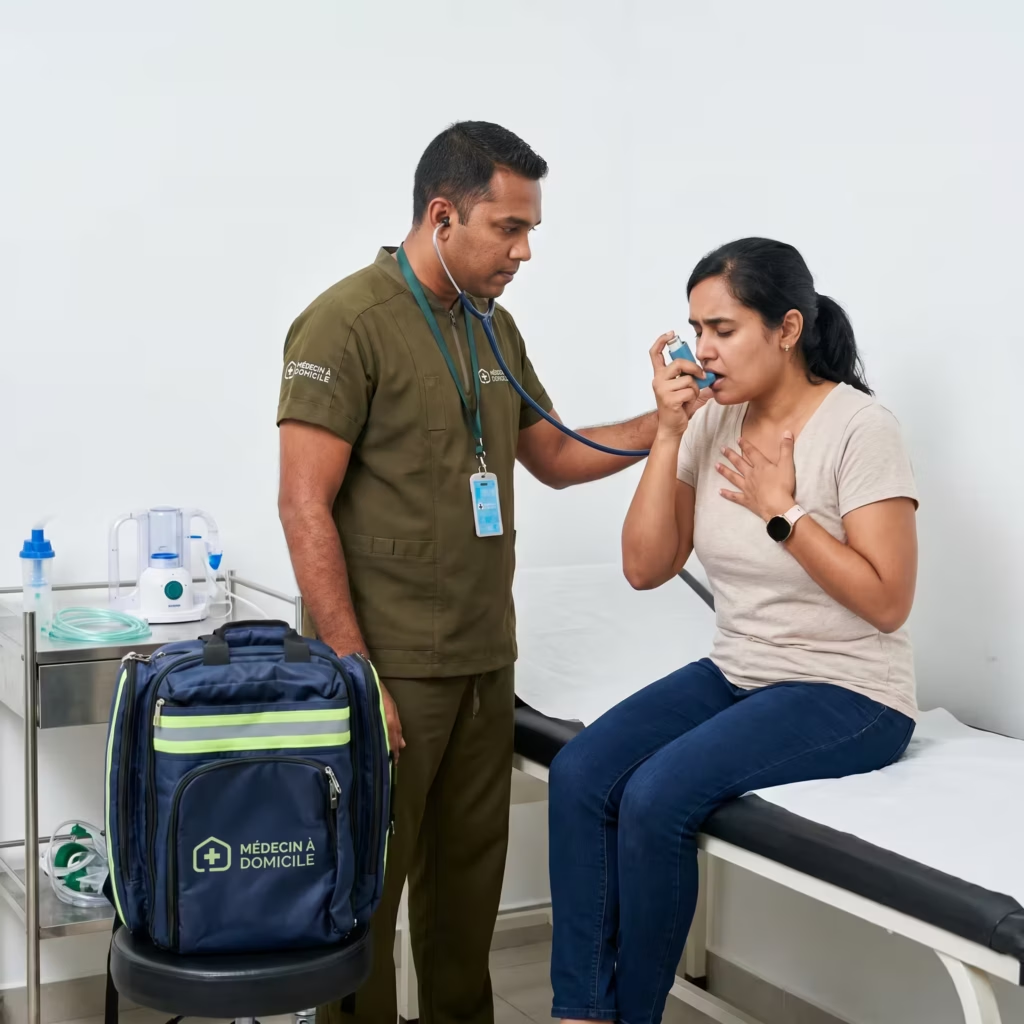
The blue reliever inhaler (usually salbutamol/Ventolin) is designed for exactly this situation. Take one puff every 30 to 60 seconds, up to a maximum of 10 puffs, using a spacer if available (a spacer makes the inhaler far more effective). If the person does not feel better after 10 puffs, or feels worse at any point, call SAMU 114 for an ambulance immediately. If the ambulance has not arrived after 15 minutes, repeat the puffs: one puff every 30 to 60 seconds, up to 10 puffs.
If the patient does not have a spacer, each puff should be inhaled individually with a slow, deep breath, held for 10 seconds before exhaling.
Step 4: Remove the trigger if identifiable
If the attack was triggered by something specific (smoke, a mosquito coil, dust, a cleaning product, an animal), remove the trigger or move the patient to a different room with clean air. Open windows for ventilation if outdoor air quality is good.
Step 5: Monitor and decide
If the inhaler brings relief, the patient’s breathing normalises, and they can speak comfortably, the attack is resolving. Continue monitoring for the next few hours, as symptoms can return, and have the patient seen by a doctor the same day, even if they feel better: call 86121 for a home visit. If the patient does not feel better after 10 puffs, or if any of the emergency signs below appear, call SAMU 114 immediately.
When to Call SAMU 114 or a Doctor
Every asthma attack should be followed by a medical review, ideally the same day, even if the inhaler has worked. Some situations, however, are emergencies and need an ambulance straight away.
Call SAMU 114 immediately if:
- The reliever inhaler has not helped after 10 puffs
- Breathing is getting worse despite using the inhaler
- The patient cannot speak in full sentences due to breathlessness
- The patient’s lips or fingertips are turning blue or grey
- The patient is becoming drowsy, confused, or exhausted from breathing effort
- The chest feels tight and the patient says it is not easing
- The patient is a young child who is distressed and not responding to the inhaler
- The patient is having an attack and does not have their inhaler available
- The patient has had a previous life-threatening attack and this attack is not clearly improving
Call 86121 for a home doctor if:
- The attack has eased with the inhaler: the patient should still see a doctor the same day
- This is a first episode of wheezing or breathlessness, with no diagnosis or medication, and the symptoms are mild
- Attacks are becoming more frequent, or the reliever inhaler is needed more often than usual
What a Home Doctor Can Do for Asthma
A doctor from Médecin à Domicile carries specific equipment and medication for respiratory emergencies. What a home doctor can provide goes significantly beyond what an inhaler delivers.
Nebuliser therapy
A nebuliser converts liquid medication into a fine mist that is inhaled continuously through a mask or mouthpiece. It delivers a much higher dose of bronchodilator (salbutamol) than an inhaler, reaching deeper into the lungs and providing faster, more complete relief. Nebuliser therapy is the standard treatment for moderate to severe asthma attacks in hospitals and emergency departments. With Médecin à Domicile, this same treatment is available at your home.
Oxygen monitoring
The doctor uses a pulse oximeter to measure blood oxygen levels (SpO2). Normal is 95% or above. Levels below 92% indicate the patient is not getting enough oxygen and may need additional treatment or hospital referral. Continuous monitoring during and after treatment ensures the patient is truly improving, not just feeling slightly better.
IV or intramuscular steroids
For attacks that do not respond fully to nebuliser therapy, the doctor can administer corticosteroids (such as hydrocortisone) via injection or IV. Steroids reduce airway inflammation and are a standard part of severe asthma management. Oral steroids can also be prescribed for ongoing management over the following days.
IV fluids
Prolonged attacks can lead to dehydration, especially in children. IV fluids restore hydration and can be combined with other IV medications if needed.
Clinical assessment and medication review
The doctor assesses the overall severity of the patient’s asthma, reviews their current medication (preventer and reliever), checks inhaler technique (which many people get wrong), and adjusts the treatment plan if attacks are becoming more frequent or severe.
Hospital referral if needed
If the attack does not respond to home treatment, or if oxygen levels remain low, the doctor will arrange hospital transfer. Médecin à Domicile operates its own ambulance service for emergency transport.
Asthma in Children: What Parents Need to Know
Asthma is one of the most common chronic conditions in children, and attacks can be especially frightening for both the child and the parents.
Recognising an attack in a young child
Young children may not be able to describe what they are feeling. Watch for rapid breathing or visible sucking in of the skin between the ribs or at the base of the throat. Persistent coughing, especially at night or with exercise. Wheezing that you can hear. Refusal to eat, drink, or play. Unusual quietness or withdrawal. The child saying their tummy hurts (young children sometimes feel chest tightness as stomach pain).
Using an inhaler with a spacer for children
Children under 5 should always use an inhaler with a spacer and face mask. The spacer holds the medication in a chamber so the child can breathe it in over several breaths. Without a spacer, most of the medication hits the back of the throat and never reaches the lungs. If your child has asthma and you do not have a spacer, ask your doctor or pharmacist for one.
When to call a doctor for a child
Children deteriorate faster than adults. Follow the same steps: one puff of the reliever inhaler every 30 to 60 seconds, through a spacer (with a mask for young children), up to 10 puffs. If your child is not better after 10 puffs, gets worse at any point, or is visibly struggling to breathe, call SAMU 114 immediately. Once the attack has eased, or if symptoms are mild, call 86121: a home doctor can assess your child and, if needed, administer nebuliser therapy at their bedside, which is far less distressing than an emergency department visit. Learn more about pediatric home visits.
Asthma in Elderly Patients
Asthma in elderly patients can be complicated by other conditions. Heart failure, COPD, and respiratory infections can mimic or worsen asthma symptoms. Elderly patients may also have weaker respiratory muscles, making it harder to recover from an attack.
For any elderly patient with breathing difficulty, a home doctor assessment is strongly recommended. The doctor can differentiate between asthma, heart failure, and infection, administer appropriate treatment, and monitor recovery without the patient needing to travel. Learn about elderly home doctor visits.
Preventing Asthma Attacks at Home
The best asthma management is prevention. These measures can significantly reduce the frequency and severity of attacks.
- Take preventer medication daily as prescribed, even when feeling well. Preventers reduce airway inflammation over time and make attacks less likely
- Keep the reliever inhaler accessible at all times. At home, at work, in the car, in your bag
- Reduce dust mites: wash bedding weekly in hot water, use allergen-proof mattress and pillow covers, vacuum regularly with a HEPA filter
- Control humidity: use dehumidifiers in damp rooms, fix leaks, ventilate bathrooms after showering
- Avoid smoke exposure: no smoking indoors, avoid mosquito coils (use electric repellents instead), minimise exposure to cooking smoke
- Monitor air quality during sugarcane burning season and on high-pollution days. Keep windows closed and stay indoors when air quality is poor
- Get annual flu vaccination: respiratory infections are a major asthma trigger. The flu vaccine reduces the risk of infection-triggered attacks
- Schedule regular check-ups: a home doctor check-up can review your asthma control, adjust medication, and check inhaler technique
Frequently Asked Questions
Can a home doctor give nebuliser treatment?
Yes. Doctors from Médecin à Domicile carry portable nebuliser equipment and can administer nebuliser therapy at your home. This delivers a higher dose of bronchodilator than an inhaler and is the standard hospital treatment for moderate to severe asthma attacks.
What if my inhaler is not working?
If you do not feel better after 10 puffs of your reliever inhaler (one puff every 30 to 60 seconds), or you feel worse at any point, call SAMU 114 for an ambulance. If the ambulance has not arrived after 15 minutes, repeat the puffs (up to 10). For a review after an attack, or for symptoms that are not severe, call 86121: a home doctor can check your oxygen levels, give nebuliser therapy or steroids if needed, and adjust your treatment at your bedside.
Can children get nebuliser treatment at home?
Yes. Nebuliser therapy is commonly used for children with asthma. A home doctor can administer it using a child-sized mask in the comfort of your home, which is far less stressful for the child than an emergency department.
Should I go to the hospital for an asthma attack?
Many mild asthma attacks settle at home with the reliever inhaler, followed by a doctor’s review; a home doctor can also give nebuliser therapy. If you do not feel better after 10 puffs, or you feel worse at any point, call SAMU 114 immediately. Hospital care is needed when the attack does not respond to treatment, oxygen levels drop below 92%, or the patient shows signs of respiratory failure. A home doctor can assess this and arrange hospital transfer if necessary. Read our guide on home doctor vs hospital.
Is asthma worse in Mauritius because of the humidity?
High humidity can irritate the airways and promote dust mite and mould growth, both of which are common asthma triggers. However, asthma can be well controlled in any climate with the right medication, trigger avoidance, and regular medical review.
Asthma attacks are manageable when you know what to do and have the right support. If your inhaler is not helping after 10 puffs, call SAMU 114 straight away. For a review after an attack or help keeping your asthma under control, a doctor with nebuliser equipment can come to your door: call 86121 24/7 for a home doctor visit anywhere in Mauritius. Visit medecin.mu.