
Heart Health Check at Home in Mauritius: Blood Pressure, ECG and Cholesterol
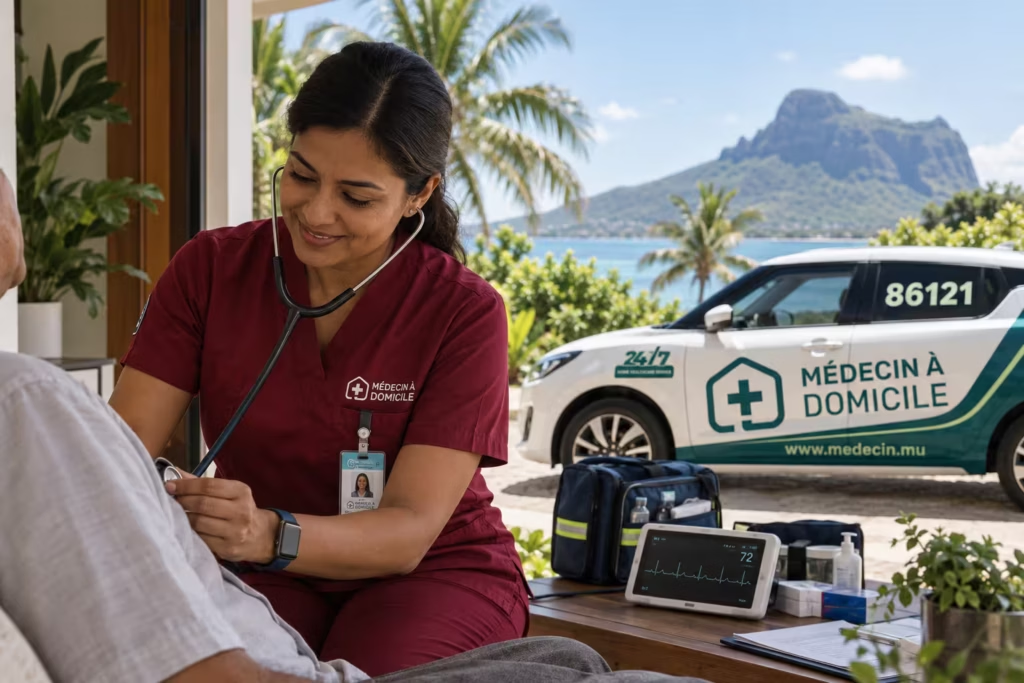
A heart health check in Mauritius covers blood pressure, pulse and rhythm, an ECG, and blood tests for cholesterol and blood sugar, alongside a review of your family history and your medication. Our licensed doctors do all of it at your home, 24/7. If you have chest pain right now, call 114 immediately.
If It Could Be a Heart Attack, Call 114 Now
Stop reading and call 114 (SAMU) immediately if you, or someone with you, has:
- Chest pain, pressure, tightness or crushing heaviness lasting more than a few minutes
- Pain spreading to the arm (often the left), jaw, neck, back or upper stomach
- Sudden breathlessness, at rest or on slight effort
- A cold sweat, with pale, clammy or grey skin
- Nausea or vomiting with any of the above
- Collapse, fainting, or a violently irregular heartbeat
Do not wait for a home visit. A heart attack needs a hospital emergency team, and every minute of delay costs heart muscle. We handle non-life-threatening problems at home; this is not one of them.
Do not drive, and do not let the patient drive. People lose consciousness at the wheel. While you wait for the ambulance, help them sit or half-lie down, loosen tight clothing, unlock the gate and find their medication list. Give aspirin only if the operator tells you to.
A heart attack does not always look dramatic
Women, older people and people with diabetes often have atypical or silent presentations. Instead of classic chest pain, the signs may be:
- Unusual, overwhelming fatigue over days
- Discomfort that feels like indigestion or trapped wind
- Breathlessness with no chest pain at all
- An ache in the jaw, neck, shoulder or upper back
- Light-headedness, sudden anxiety, or a sense that something is wrong
Diabetes blunts the nerves that carry pain, so a heart attack can be painless. If an older relative becomes suddenly breathless, grey, sweaty or confused, call 114 rather than waiting.
Stroke: Use the FAST Test
The brain runs on the same arteries; the response is identical.
- F — Face. Has the face fallen on one side? Can they smile evenly?
- A — Arms. Can they raise both arms and keep them up, or does one drift down?
- S — Speech. Is speech slurred or muddled, or have they stopped understanding you?
- T — Time. If any one of these is present, call 114 immediately.
Also call 114 for a sudden severe headache, loss of vision or numbness down one side. Note the time symptoms started, because treatment decisions depend on it.
Why Heart Health Matters Here, and Why Now
World Heart Day falls on 29 September, run by the World Heart Federation: a yearly reminder to check the numbers you cannot feel.
Cardiovascular disease is a leading cause of death in Mauritius. The Ministry of Health and Wellness treats non-communicable diseases as a national priority, as does the World Health Organization, and our island carries very high rates of diabetes and high blood pressure, which damage arteries quietly for years. That is the honest problem with heart disease in Mauritius: raised pressure and cholesterol cause no symptoms until something breaks. The only way to know is to measure.
What a Heart Check at Home Actually Involves
A proper assessment is not one number on a machine. Our doctor covers:
- Your history and family history. Symptoms on exertion, palpitations, swollen ankles, breathlessness at night, and any heart disease, stroke, diabetes or early sudden death in the family.
- Blood pressure, measured properly and usually more than once.
- Pulse and rhythm, by hand and with a stethoscope, for an irregular beat or a murmur.
- An ECG, recording the heart’s electrical activity: rhythm problems such as atrial fibrillation, strain, or previous damage. We perform an ECG at home and the doctor reviews the tracing.
- Blood tests: total cholesterol, LDL (“bad”) and HDL (“good”), triglycerides, fasting glucose or HbA1c, and kidney function, through our blood tests at home in Mauritius, so nobody queues at a laboratory.
- Weight and waist, because fat carried around the middle matters more than the scale.
- A medication review, covering blood pressure tablets, statins, herbal remedies and painkillers, some of which push pressure up.
To combine this with general screening, see our full health check-up service.
Book a heart check before World Heart Day. Blood pressure, pulse, ECG and cholesterol testing, in your living room, by a licensed doctor. Call 86121 or message us on WhatsApp. Rs 3,000 day (08:00–18:00) · Rs 4,000 night (18:00–08:00).
Blood Pressure, Explained Plainly
A reading has two numbers, for example 130/85 mmHg.
- Systolic (the top number) is the pressure in your arteries when the heart squeezes.
- Diastolic (the bottom number) is the pressure between beats, as the heart relaxes and refills.
Both matter. Persistently raised pressure damages the arteries, kidneys, eyes and brain, which is why untreated hypertension leads to heart attacks, heart failure and strokes.
One high reading does not mean you have hypertension. Blood pressure moves all day, rising with stress, pain, caffeine, a cigarette or the sight of a doctor. Diagnosis rests on repeated readings on different days, often supported by a week of home readings. One normal reading equally does not clear you if you feel unwell.
| Category | Systolic (top) | Diastolic (bottom) | What it generally means |
|---|---|---|---|
| Normal | Below 120 mmHg | Below 80 mmHg | Re-check at least once a year, or at any consultation |
| Elevated / high-normal | 120–139 mmHg | 80–89 mmHg | Not yet hypertension, but a warning. Lifestyle changes and regular monitoring |
| Hypertension, grade 1 | 140–159 mmHg | 90–99 mmHg | Confirm with repeated readings on separate days, then discuss treatment |
| Hypertension, grade 2 | 160 mmHg or more | 100 mmHg or more | See a doctor promptly; treatment is usually needed |
| Very high reading | 180 mmHg or more | 110 mmHg or more | Rest 5 minutes and repeat. If still this high, seek medical help the same day. With chest pain, breathlessness, severe headache, visual change or weakness, call 114 |
These bands are a general guide; thresholds differ slightly between international guidelines. Your own target is set by your doctor, and often differs if you have diabetes, kidney disease or are elderly.
How to take a blood pressure check at home correctly
Most home readings are wrong for avoidable reasons. Instead:
- Rest quietly for 5 minutes first, with no coffee, tea, cigarette or exercise for 30 minutes, and empty your bladder.
- Sit with your back supported, feet flat, legs uncrossed, and rest the arm on a table so the cuff sits at heart level; an unsupported arm reads high.
- Use the correct cuff size, on bare skin: a cuff too small for a large arm reads falsely high.
- Stay still and do not talk while it inflates.
- Take two or three readings a minute apart, morning and evening for seven days, and record them all.
- Prefer a validated upper-arm monitor; wrist and finger devices are far less reliable.
Our doctors take a blood pressure check at home at every visit, and can verify your machine. For ongoing management, read our guide on high blood pressure at home.
Cholesterol and the Other Blood Tests
Cholesterol is a fat carried in the blood. LDL deposits in artery walls and drives the plaques that cause heart attacks. HDL helps remove it. Triglycerides rise with sugar, refined carbohydrate, alcohol and excess weight.
A lipid profile measures all of these together, usually every one to two years and more often if it is raised, if you take a statin or if you have diabetes; your doctor will say whether to fast beforehand. A cholesterol test in Mauritius is routinely bundled with fasting glucose or HbA1c and kidney function, because those results are read together to estimate overall risk.
Nothing you feel will tell you your LDL. It is a laboratory number or nothing.
Who Is Most at Risk in Mauritius
- Diabetes, very common here, which roughly doubles cardiovascular risk.
- High blood pressure, also very common, and usually symptomless.
- Family history, including South Asian ancestry, which carries elevated cardiovascular risk at a lower BMI than European populations. A “normal” BMI is not reassurance on its own.
- Smoking, including occasional social smoking and shisha.
- Central obesity, weight carried around the abdomen, and physical inactivity, made worse by heat and long commutes.
- High salt intake, where Mauritian kitchens need the most attention.
- Raised cholesterol, chronic kidney disease, heavy alcohol use and sleep apnoea.
Prevention, in Genuinely Mauritian Terms
No doctor should ask a Mauritian family to abandon its kitchen. Small, sustained changes beat drastic diets, which nobody keeps past a month.
Salt is the first target, because blood pressure responds to it quickly. Most of our salt is already in the food:
- Bouillon cubes are largely salt: use half a cube, and build flavour with garlic, ginger, thyme, curry leaves and chilli.
- Salted fish and salted dried snacks are very high in sodium. Keep them occasional, and soak salted fish before cooking.
- Achards, pickles, bottled sauces, processed snacks and instant noodles add up fast: a spoonful, not a pile.
- Taste before you salt, and take the shaker off the table.
Oil and fried food. Gateaux piments, samoussas and fried noodles are part of life here, but work better as a treat than a daily breakfast. Grill or steam fish where you can.
Portions, especially the starch. Rice, roti and dholl puri are not forbidden. Serve one modest bowl of rice rather than a heaped plate, half the plate vegetables such as bred or chouchou, a quarter fish, chicken or dholl. Serve the vegetables first: rice served first expands to fill the plate.
Drinks are the quiet problem. Alouda, soft drinks and bottled juices deliver a large sugar load in minutes, and tea four times a day with two spoons of sugar adds up. Cut by half a spoon at a time.
Movement that suits the climate. Aim for about 30 minutes of brisk walking most days, early morning or late afternoon to avoid the heat: the beach, the Pamplemousses garden, the path round Trou aux Cerfs, or your own neighbourhood. Walking with a neighbour keeps it going. If you have heart symptoms, ask a doctor first.
Stopping smoking is the single most powerful change available, and the benefit begins within days.
If You Have Diabetes, Your Heart Needs Checking Too
Diabetes and heart disease travel together: high blood sugar damages large and small vessels alike, and blunts the warning pain. Anyone with diabetes should have their cardiovascular risk assessed regularly, not just their sugar: blood pressure at every review, an annual lipid profile and kidney function, and an ECG when the doctor advises it. The same applies if you are treated for high blood pressure. Read our diabetes management guide.
For an older parent, a standing monthly review is easier than a crisis: our home doctor service for the elderly covers blood pressure, medication and general condition on a schedule.
Worried about a parent’s blood pressure? We visit quickly, often the same day, anywhere on the island. Call 86121 or WhatsApp +230 5801 7777. 24/7, 365 days a year, public holidays included.
Booking a Heart Check at Home in Mauritius
Since 2016 we have served more than 130,000 families, with a 4.9-star rating from over 480 Google reviews and 30+ licensed doctors on call 24/7, 365 days a year, from The Hybrid, Telfair, Moka. Consultations, blood pressure checks, ECG, blood tests, check-ups and monthly monitoring visits are part of our doctor at home service.
| Service | Price | What is included |
|---|---|---|
| Home consultation, daytime (08:00–18:00) | Rs 3 000 | Travel and full consultation by a licensed doctor: history, examination, blood pressure, pulse and rhythm, prescription, advice and referral if needed |
| Home consultation, night (18:00–08:00) | Rs 4 000 | The same service overnight, at weekends and on public holidays |
| ECG during the visit | Quoted when you book | Tracing recorded at your home and reviewed by the doctor, with referral if anything needs a cardiologist |
| Blood tests (lipid profile, glucose or HbA1c, kidney function) | Laboratory fees quoted when you book | Sample taken at your home, results sent to you and explained by the doctor |
| Monthly monitoring visit for seniors | Consultation rate as above | Regular review of blood pressure, weight, symptoms and medication |
| Cashless billing | Available with partner insurers | Eagle Insurance and Jubilee, subject to your policy cover |
No hidden fees. For the full breakdown see home doctor costs in Mauritius, browse everything we offer, read our frequently asked questions, or get in touch with our team.
Know your numbers this World Heart Day. Blood pressure, cholesterol and an ECG, without leaving the house. Often the same day. Call 86121 or WhatsApp +230 5801 7777. Rs 3 000 (day) · Rs 4 000 (night) · Cashless billing with Eagle Insurance and Jubilee.
Sources and Medical Disclaimer
This article draws on guidance from the World Health Organization, the World Heart Federation and the Ministry of Health and Wellness (Mauritius). It is general information, not a substitute for a consultation, and blood pressure bands, cholesterol targets and testing intervals are individual. Never start, stop or change a prescribed medication without medical advice. For a life-threatening emergency, including suspected heart attack or stroke, call 114 (SAMU). Otherwise, call 86121.
Frequently Asked Questions
What does a heart health check in Mauritius include?
A full check covers your symptoms and family history, blood pressure, pulse and rhythm, an ECG, and blood tests for cholesterol, triglycerides, blood sugar and kidney function, plus weight, waist and a medication review. Our doctors do the whole assessment at your home and explain every result.
What are the signs of a heart attack?
Chest pain, pressure or tightness lasting more than a few minutes, pain spreading to the arm, jaw, neck or back, sudden breathlessness, cold sweat, nausea or collapse. Call 114 immediately, do not wait for a home visit and do not drive. Symptoms can be silent in diabetes.
How often should I check my blood pressure at home?
If your readings are normal, once a year is usually enough. If your pressure is raised or newly treated, your doctor will often ask for readings morning and evening for seven days. Take two or three measurements a minute apart and record every one.
Can I have a cholesterol test at home in Mauritius?
Yes. A doctor or nurse takes the blood sample at your home and sends it to the laboratory, so you avoid queuing while fasting. A lipid profile measures total cholesterol, LDL, HDL and triglycerides, usually alongside blood sugar and kidney function so your overall risk can be assessed.
Why does diabetes increase the risk of heart disease?
High blood sugar damages both large arteries and small blood vessels, and often coexists with high blood pressure and raised triglycerides. It also blunts the nerves carrying pain, so a heart attack may be silent. Have blood pressure, cholesterol and kidney function reviewed regularly, not only your sugar.
What is the best way to lower blood pressure in Mauritius?
Cut salt first: use half a bouillon cube, limit salted fish, achards and processed snacks, and season with garlic, ginger and herbs instead. Add 30 minutes of brisk walking most days, early or late to avoid the heat, cut sugary drinks, and stop smoking. Take prescribed medication exactly as directed.
The numbers you cannot feel are the ones that matter. For a heart check at your home anywhere in Mauritius, call 86121 or visit medecin.mu.