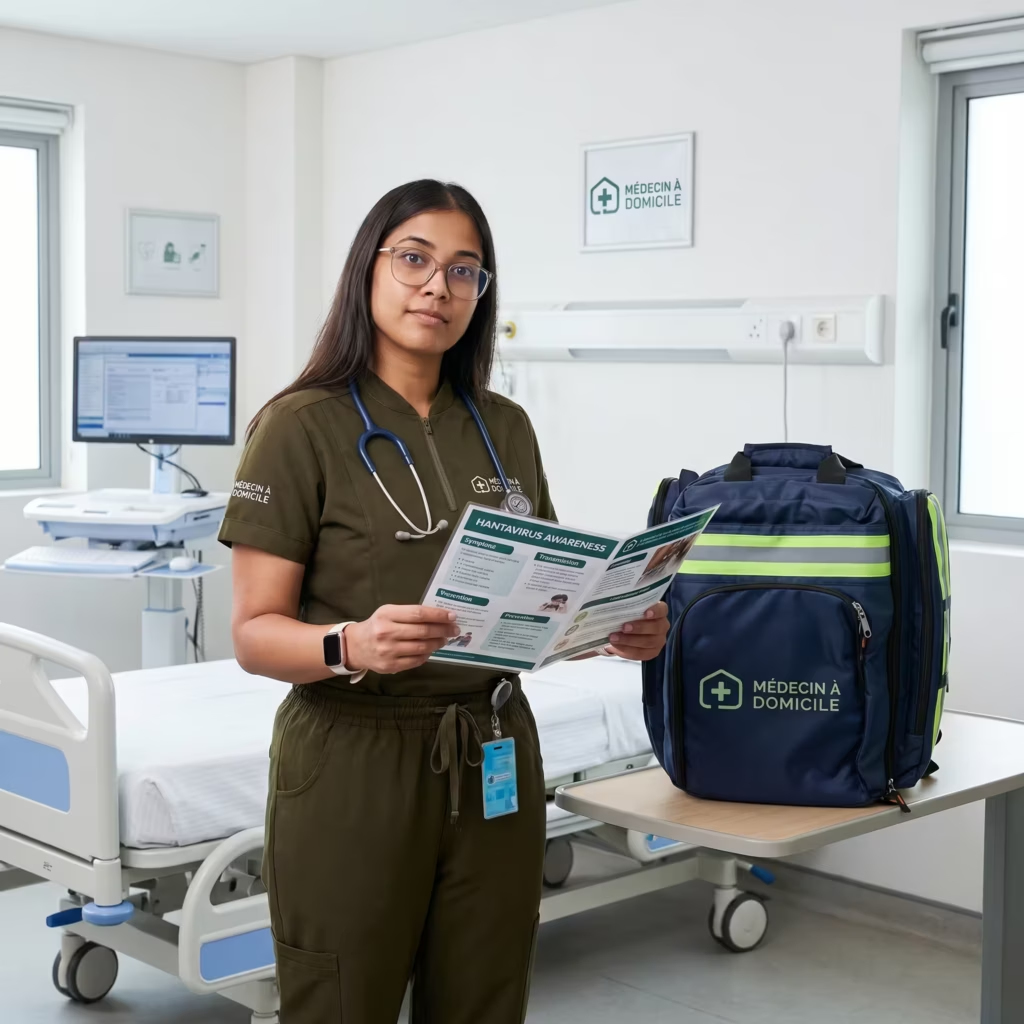

Hantavirus: Symptoms, Prevention, and What Families in Mauritius Should Know
Hantavirus has returned to global headlines following the May 2026 outbreak on the cruise ship MV Hondius in the Atlantic Ocean, which has resulted in multiple deaths and cases across several countries. While the World Health Organization has assessed the overall public health risk as low, the outbreak has raised important questions for families, travellers, and island nations like Mauritius that welcome international cruise ships and tourists throughout the year.
This guide explains what hantavirus is, how it spreads, what the symptoms look like, how to protect yourself, and what to do if you suspect exposure.
What Is Hantavirus?
Hantaviruses are a family of viruses carried primarily by rodents. They can cause two severe illnesses in humans: Hantavirus Pulmonary Syndrome (HPS), which attacks the lungs and is most common in the Americas, and Haemorrhagic Fever with Renal Syndrome (HFRS), which affects the kidneys and is more common in Asia and Europe.
Hantavirus disease drew wide medical attention during the Korean War in the 1950s; the virus was identified in 1976 and is named after the Hantan River in South Korea. Despite being studied for decades, hantaviruses remain dangerous because there is no specific antiviral treatment and no widely available vaccine. Supportive medical care is the primary treatment.
Globally, an estimated 150,000 cases of hantavirus-related illness occur each year, with more than half in China. In the Americas, 229 cases and 59 deaths were reported in 2025 alone, with a case fatality rate of approximately 25%.
The 2026 MV Hondius Outbreak
In May 2026, a cluster of severe respiratory illness was identified on the MV Hondius, a Dutch-flagged expedition cruise ship that departed from Ushuaia, Argentina, on 1 April 2026 with 147 passengers and crew from 23 nationalities. The ship’s itinerary included Antarctica, South Georgia, Tristan da Cunha, Saint Helena, and Ascension Island before heading to the Canary Islands.
The first passenger developed symptoms on 6 April and died on 11 April. His wife became the second case, dying in Johannesburg on 26 April. By early May, the WHO had confirmed 5 cases and 3 suspected cases, with 3 deaths. The strain was identified as the Andes virus, the only known hantavirus capable of limited human-to-human transmission.
The outbreak triggered an international response involving health authorities from the Netherlands, United Kingdom, South Africa, Spain, Germany, Switzerland, Singapore, Cape Verde, and Argentina. Passengers who had disembarked at various ports were traced and monitored. The ship was initially denied entry by Cape Verde and the Canary Islands before eventually being permitted to dock.
The WHO assessed the global risk as low but noted that more cases could emerge given the virus’s long incubation period (symptoms can appear 1 to 8 weeks after exposure).
How Hantavirus Spreads
Understanding how hantavirus is transmitted is essential for prevention. The primary route is not person-to-person contact but rather exposure to infected rodents.
Main transmission routes
The most common way humans contract hantavirus is by breathing in aerosolised virus particles from infected rodent urine, droppings, or saliva. This can happen when cleaning areas where rodents have been present, when disturbing dust contaminated with rodent excreta, or when entering enclosed spaces (sheds, storage rooms, cabins) that have been infested.
Direct contact with rodent urine, droppings, or nesting materials through broken skin, or being bitten by an infected rodent, can also transmit the virus. Consuming food or water contaminated with rodent excreta is another possible route.
Can hantavirus spread between people?
Most hantavirus strains do not spread from person to person. The exception is the Andes strain, which has been documented to spread between humans in extremely rare cases, typically involving prolonged close contact such as household members, intimate partners, and healthcare workers. This is the strain identified in the MV Hondius outbreak. The WHO has emphasised that human-to-human transmission of the Andes strain remains very uncommon.
Recognising Hantavirus Symptoms
Symptoms typically appear 1 to 8 weeks after exposure, with most cases developing within 2 to 4 weeks. The disease progresses in phases.
Early symptoms
- Fever and chills
- Severe muscle aches, especially in the thighs, hips, back, and shoulders
- Headache
- Fatigue
- Nausea, vomiting, diarrhoea, and abdominal pain
- Dizziness
These early symptoms are easily mistaken for the flu, dengue, or leptospirosis. The distinguishing factor is the context: symptoms appearing after contact with rodents, rodent-infested environments, or travel to areas where hantavirus is endemic (particularly South America) should raise suspicion.
Late symptoms (Hantavirus Pulmonary Syndrome)
After the initial phase, HPS can progress rapidly to severe respiratory symptoms. Warning signs include shortness of breath, coughing, a feeling of tightness in the chest, rapid breathing, and a sensation of suffocation. The lungs fill with fluid (pulmonary oedema), and the condition can deteriorate to acute respiratory distress syndrome (ARDS) and shock within hours. This progression is what makes hantavirus so dangerous: it can go from flu-like symptoms to life-threatening respiratory failure very quickly.
Late symptoms (Haemorrhagic Fever with Renal Syndrome)
HFRS, more common with Asian and European strains, progresses differently. It can cause low blood pressure, acute kidney failure, and in severe cases, haemorrhage. Back pain and abdominal pain are more prominent in this form.
How to Prevent Hantavirus Exposure
Prevention centres on avoiding contact with rodents and their excreta.
At home
- Seal holes, gaps, and cracks in walls, foundations, and rooflines where rodents can enter
- Store food in sealed, rodent-proof containers
- Keep rubbish in sealed bins and dispose of it regularly
- Remove clutter and debris around the home where rodents can shelter
- Clear overgrown vegetation near the house
- If you find evidence of rodent activity (droppings, urine stains, gnaw marks), do not sweep or vacuum. Wet the area with disinfectant first, then clean with gloves and a damp cloth. Ventilate the room for at least 30 minutes before cleaning
For travellers
- Avoid contact with rodents and their environments when travelling, particularly in rural areas of South America, Central America, and parts of Asia
- When staying in rural cabins, lodges, or campsites, check for signs of rodent activity before settling in
- Do not sleep on the ground in areas where rodents may be present
- Avoid touching or handling dead rodents
- If visiting destinations where hantavirus is endemic, be aware of the symptoms and seek medical attention promptly if they appear within 8 weeks of exposure
In Mauritius specifically
While hantavirus is not currently endemic in Mauritius, the island does have a significant rat population, which is a known risk factor for leptospirosis (another rodent-transmitted disease). The same rodent control measures that prevent leptospirosis also reduce hantavirus risk. Additionally, Mauritius welcomes international cruise ships and tourists from regions where hantavirus circulates. Awareness of symptoms and quick access to medical care are important for both residents and visitors.
Treatment for Hantavirus
There is currently no specific antiviral medication for hantavirus. There is no widely available vaccine. Treatment is entirely supportive and depends on the severity of the illness.
For early symptoms, the priority is rest, hydration, and close monitoring. For severe cases (HPS progressing to respiratory distress), hospitalisation is essential. Patients may require mechanical ventilation, oxygen therapy, and intensive care monitoring. For HFRS with kidney involvement, dialysis may be needed.
The single most important factor in survival is early recognition and early medical intervention. The WHO, CDC, and infectious disease experts all emphasise that patients who receive medical care before severe respiratory symptoms develop have significantly better outcomes.
When to Call a Doctor
Seek medical evaluation if you or a family member develops flu-like symptoms (fever, muscle aches, headache, nausea) within 1 to 8 weeks after any of the following: contact with rodents, rodent droppings, or rodent-infested environments; travel to areas where hantavirus is known to circulate (particularly Argentina, Chile, Brazil, Bolivia, Panama); cleaning or entering enclosed spaces with evidence of rodent activity; or close contact with someone diagnosed with hantavirus.
Call immediately if:
- Breathing becomes difficult or rapid after an initial period of flu-like symptoms
- There is a feeling of tightness or pressure in the chest
- The patient develops a persistent cough with worsening shortness of breath
- The patient becomes confused, unusually drowsy, or shows signs of shock (cold clammy skin, rapid weak pulse)
A home doctor can perform an initial clinical assessment, check vital signs and oxygen levels, administer supportive treatment including IV fluids, and determine whether hospital referral is needed.
Médecin à Domicile provides 24/7 home doctor visits across Mauritius. If you or a family member develops concerning symptoms after potential rodent exposure or international travel, call 86121 for a licensed doctor to assess you at home.
Hantavirus vs Other Infections in Mauritius
Several infections in Mauritius share early symptoms with hantavirus. Knowing the differences helps both patients and doctors make faster decisions.
Dengue fever is spread by mosquitoes, not rodents, and causes pain behind the eyes and skin rash, which are uncommon in hantavirus. Leptospirosis is also spread through contact with contaminated water (rat urine), but mainly affects the liver and kidneys, although severe cases can also affect the lungs. Chikungunya is mosquito-borne and characterised by severe joint pain, which is not a feature of hantavirus. Influenza shares the early flu-like symptoms but does not typically progress to the rapid pulmonary failure seen in HPS.
If you are unsure, call 86121 for a home assessment. A doctor can clinically evaluate the symptoms and arrange appropriate testing.
Frequently Asked Questions
Is hantavirus in Mauritius?
Hantavirus is not currently considered endemic in Mauritius. However, the island has a rat population and receives international travellers from regions where hantavirus circulates. Awareness and prevention measures are important, particularly for people exposed to rodent-infested environments.
Is hantavirus the next COVID?
No. Infectious disease experts and the WHO have clearly stated that hantavirus does not spread as easily as COVID-19 or influenza. Unlike COVID, hantaviruses have been known for decades, do not mutate rapidly, and do not spread through casual contact. The Andes strain, which can transmit between humans, does so only rarely and through prolonged close contact. There is no basis for pandemic-level concern.
Can hantavirus be treated at home?
Early symptoms can be assessed by a home doctor, who can check vital signs, administer IV fluids, and monitor for progression. However, if the disease progresses to respiratory distress, hospitalisation with intensive care support is essential. Early medical assessment is critical because outcomes are significantly better when treatment begins before severe respiratory symptoms develop.
How do I protect my family from hantavirus?
The most effective prevention is rodent control: seal entry points, store food securely, keep surroundings clean, and never dry-sweep areas with rodent droppings. For travellers, avoid contact with rodents and rodent-infested environments, particularly in South America. If symptoms develop after exposure, seek medical care promptly.
Should I be worried about cruise ships visiting Mauritius?
The MV Hondius outbreak was linked to a specific exposure in Argentina, not to cruise travel in general. Cruise ships visiting Mauritius follow international health protocols. However, if you are a cruise passenger or have recently travelled and develop flu-like symptoms with breathing difficulty, seek medical evaluation promptly and mention your travel history.
Hantavirus is rare but serious. Early recognition and early medical care save lives. If you develop flu-like symptoms after rodent exposure or international travel, do not wait. Call 86121 for a 24/7 home doctor visit anywhere in Mauritius. Visit medecin.mu.