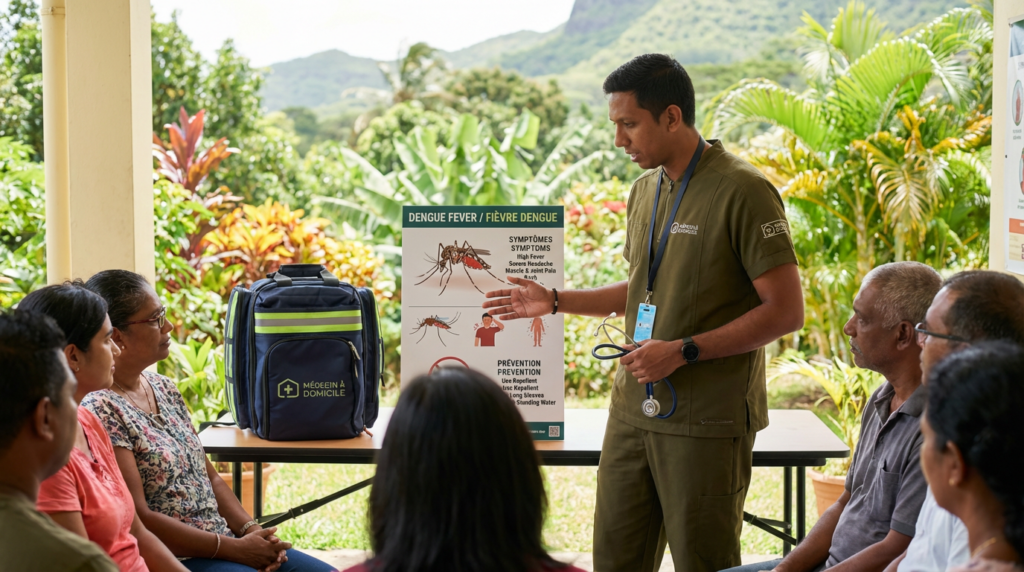

Dengue Fever in Mauritius: Symptoms, Prevention, and When to Call a Doctor
Dengue fever is a mosquito-borne viral infection that poses a real health risk in Mauritius, particularly during the warmer and wetter months from March to May. With over 3,000 cases reported on the main island in recent outbreak periods, understanding how to recognise the symptoms, protect your household, and respond quickly is essential for every family on the island.
This guide provides practical, medically accurate information about dengue fever in Mauritius — what causes it, how to spot it early, how to prevent mosquito bites, and when the situation requires a doctor.
What Is Dengue Fever?
Dengue is a viral infection caused by one of four dengue virus serotypes (DENV-1 through DENV-4). It is transmitted to humans through the bite of infected Aedes albopictus mosquitoes — the primary vector in Mauritius. These mosquitoes are daytime biters, most active during early morning and late afternoon hours.
Unlike malaria-carrying mosquitoes, the Aedes mosquitoes that spread dengue breed in small collections of standing water — flower pots, water tanks, discarded tyres, open containers, and gutters. This means dengue risk is highest in and around residential areas, not just in rural or forested zones.
There is currently no specific antiviral treatment for dengue. Management focuses on relieving symptoms, maintaining hydration, and monitoring for warning signs of severe dengue.
Recognising Dengue Fever Symptoms
Symptoms typically appear 4 to 7 days after being bitten by an infected mosquito. The illness can range from mild to severe, and some people — particularly those infected for the first time — may experience no symptoms at all.
Common symptoms of dengue fever
- Sudden high fever (often 39–40°C)
- Severe headache, especially behind the eyes
- Intense muscle and joint pain — dengue is sometimes called “breakbone fever” because of this
- Nausea, vomiting, or loss of appetite
- Fatigue and general weakness
- Skin rash — may appear 2 to 5 days after the fever starts
- Mild bleeding from the nose or gums
Most people recover within 1 to 2 weeks. However, the critical phase occurs when the fever drops — typically around days 3 to 7 — and this is when severe dengue can develop.
Warning signs of severe dengue
Severe dengue is a medical emergency. Seek immediate medical attention if you or a family member experiences any of the following after the fever begins to subside:
- Severe abdominal pain or persistent vomiting
- Bleeding from the gums, nose, or in the stool
- Rapid breathing or difficulty breathing
- Extreme fatigue or restlessness
- Blood in vomit or stools
- Cold or clammy skin
Severe dengue can lead to dengue haemorrhagic fever or dengue shock syndrome, both of which require urgent hospital care.
How to Prevent Dengue Fever in Mauritius
Prevention centres on two things: avoiding mosquito bites and eliminating breeding sites around your home.
Protect yourself and your family from bites
- Use insect repellent containing DEET (at least 20–30%) on exposed skin, especially during morning and late afternoon hours
- Wear long-sleeved shirts and long trousers when outdoors during peak mosquito activity
- Use mosquito nets over beds — particularly for infants and young children
- Install or repair window and door screens to keep mosquitoes out of your home
- Use electric mosquito repellent devices or coils indoors
Eliminate mosquito breeding sites
- Empty and clean all containers that collect standing water — flower pot saucers, buckets, pet bowls, birdbaths
- Cover water storage tanks and barrels with tight-fitting lids
- Clear blocked gutters and drains regularly
- Dispose of old tyres, cans, and bottles that can collect rainwater
- Change water in vases and plant trays at least once a week
- Keep swimming pools properly chlorinated and maintained
Mosquito control is a community effort. Encourage neighbours and your local community to eliminate standing water — a single uncovered container can produce hundreds of mosquitoes.
Managing Dengue Symptoms at Home
Most dengue cases are managed at home with supportive care. There is no antibiotic or antiviral that cures dengue — treatment focuses on relieving symptoms and preventing dehydration.
What to do if you suspect dengue
- Rest — the body needs energy to fight the infection
- Stay hydrated — drink plenty of water, oral rehydration solutions, coconut water, or clear soups. Dehydration is one of the biggest risks with dengue
- Take paracetamol for fever and pain relief
- Avoid aspirin and ibuprofen — these can increase the risk of bleeding, which is dangerous with dengue
- Monitor your temperature regularly and note when the fever drops — this is the critical window
- Watch for warning signs of severe dengue, especially between days 3 and 7
If symptoms worsen or you are unsure about the severity, it is always safer to have a doctor assess the situation.
When to Call a Doctor
While many dengue cases resolve with home care, certain situations require professional medical evaluation — and the sooner the better.
Call a doctor if:
- Fever persists beyond 3 days without improvement
- The patient cannot keep fluids down due to persistent vomiting
- You notice any bleeding — from gums, nose, or in stools
- The patient becomes unusually drowsy, confused, or restless
- A child under 5 has a high fever with poor fluid intake
- An elderly family member shows sudden weakness or dizziness
- You are unsure whether the illness is dengue or another infection
A home doctor can assess the patient, check vital signs, test for dehydration, administer IV fluids if needed, and determine whether hospital referral is necessary — all without the patient needing to travel.
Médecin à Domicile provides 24/7 home doctor visits across Mauritius. If you or a family member is showing dengue symptoms and needs medical evaluation, call 86121 for a licensed doctor to visit your home.
Dengue and Children: What Parents Should Know
Children are particularly vulnerable to dengue, and symptoms can escalate quickly. Young children may not be able to describe their symptoms clearly, so parents should watch for high fever, irritability, refusal to eat or drink, skin rash, and lethargy.
Children who are vomiting and unable to stay hydrated may need IV fluid therapy administered at home by a doctor. Do not wait for symptoms to become severe — early medical assessment is always the safer choice for children. Read more about pediatric home visits.
Dengue and Elderly Patients
Elderly individuals — especially those with diabetes, heart conditions, or weakened immune systems — face higher risks of complications from dengue. Dehydration can set in faster, and warning signs may be less obvious in older patients.
If an elderly family member develops a sudden fever during dengue season, having a doctor assess them at home is the safest and most comfortable approach. Learn more about elderly care at home.
Frequently Asked Questions
Is dengue contagious from person to person?
No. Dengue cannot be transmitted directly between people. It spreads only through the bite of an infected Aedes mosquito. However, a mosquito can become infected by biting a person with dengue and then pass it to others.
Can you get dengue more than once?
Yes. There are four dengue serotypes, and infection with one does not provide full protection against the others. A second infection with a different serotype can increase the risk of severe dengue.
When is dengue season in Mauritius?
Dengue transmission occurs year-round in Mauritius but peaks between March and May, coinciding with warmer temperatures and increased rainfall that create ideal mosquito breeding conditions.
Should I take aspirin for dengue fever?
No. Aspirin and ibuprofen should be avoided because they can increase the risk of bleeding. Use paracetamol for fever and pain relief instead.
Can a doctor treat dengue at home?
Yes. A home doctor can assess the severity of the illness, monitor vital signs, administer IV fluids for dehydration, provide medication guidance, and determine whether hospital care is needed. Call 86121 to request a home visit.
Dengue season in Mauritius is here. Protect your family by eliminating standing water, using mosquito repellent, and knowing when to seek medical help. If you need a doctor, call 86121 or visit medecin.mu.